

#123
Why AI isn't winning in Hollywood, is AI more local than we think and some X token baiting.
Welcome to another edition of our Builder Series Newsletter, where we dive into some of the challenges in building with AI, share research and wrap up all the latest AI news from across the world.
How Netflix and Hollywood have adapted with AI
Ted Serandos, Co-CEO of Netflix outlines why AI will not win in the entertainment industry.
I think Ted is one of the most reasonable big tech CEOs and provides more of an honest take on AI disruption and diffusion. During a live interview on the Prof G Markets podcast in LA, he outlined why AI isn’t winning or more so, why it won’t win.
AI is not replacing creatives
Twenty four months ago, the theme in Hollywood was AI is going to destroy this industry. That timeline coincided with the release of Sora, which ironically has been discontinued by OpenAI.
Serandos outlined that from what he is seeing in the data, more creative jobs are being created. Creative writers have trained Claude as their writing partner - bouncing ideas, refining scripts, but importantly not writing end to end.
AI is making movie sets safer
They are using AI on a lot of the high risk pre-visual shots to determine how to make that shot safer, and weight up risk and reward. This is an actual life saving investment that was unattainable pre-AI.
ROI on script creation not stacking up
The average cost of a movie script compared to the overall cost to make a movie is around 1%. So the investment case for using AI to replace creativity and creation does’t math up.
“AI does not have creative judgement, it’s built for reasoning”
Serandos is long on human creation, backing that statement by stating that Netflix is investing in a $1B studio in New Jersey,
AI slop is becoming more noticeable
More and more people are picking apart new movie posters created by AI on reddit. Serandos mentioned that humans can tell apart an AI generated poster vs. a human in the loop generated poster. Even with all the training data, they seem to always revert back to the human-in-the-loop.
Final note:
The biggest impact to entertainment over the last decade has been the introduction of drones to replace helicopters. Helicopters were expensive, required a lot of planning and dangerous to maneuver during action shots … drones are 1/50th the cost per run and a lot safe. So sure, jobs were displaced in that use case, but in the same period, helicopter taxis across LA also increased…. which brings me back to AI and entertainment.. some jobs will be replaced, but it’s clear that human judgement is still required. AI is a tool.
Is AI Innovation and diffusion more local than we think?
The Generation and Diffusion of Artificial Intelligence (AI) Around the World
You know when you come across research and you are already excited about the next version? …. Not really Sean… well humour me a bit.
Remember when Dario Amodei from Anthropic mentioned at Davos that AI is becoming so powerful that we will have a country of geniuses packed into a data centre by 2026? Well that concept has lived in my head rent free, so there is probably a marketing lesson there somewhere.
But, my reaction wasn’t ‘oh wow amazing, can’t wait’… it was more… ‘Surreeeeee’…
So when I found research by Heather Berry (Georgetown) and Róisín Donnelly (Tilburg) on how AI innovations are generated and spread globally. that could potentially back up my bias… well I jumped into.
The full pre-paper can be found here.
Core research question
The authors examine whether AI technologies rely on more geographically localized knowledge than non-AI technologies in the same fields. They focus on patent data using the Patstat Global database, which covers patent families from over one hundred patent offices across industrialized and developing countries over roughly three decades.
Why AI might be more local
The paper argues several features of AI push toward localized development. AI models rely heavily on interactions between data and application scenarios, and local data is crucial for training and optimization, often requiring high quality proprietary data for context. Digital ecosystems and existing knowledge bases within countries matter for AI development, and open source models like Llama and Mistral need adapting to fit local languages and contexts (examples cited include ALLaM in Arabic, UlizaLlama in Kenya, and MuRIL in India).
Main findings
Overall, AI patents are less likely to build on foreign knowledge than non-AI patents in the same technology field, year and innovating country. This effect is small but significant, larger in the last five years, and varies across patent authorities. Specifically, AI patents are about 0.3 percentage points less likely to cite foreign patents than non-AI patents.
The effect is dampened for leading AI firms and where there are more global knowledge connections through foreign investment or multi-country innovations, but not where there are production connections through imports and exports. Multi-country inventor connections produce a 1.78 percentage point reduction in the effect, and leading AI firms a 0.47 percentage point reduction, while physical product connections like FDI and trade have very small or insignificant effects.
The China natural experiment
The authors exploit Google’s sudden 2014 shutdown of search services in China. Google had ceased operations in China in 2010 but redirected searches through Hong Kong; the 2014 blockage was unexpected and created a search shock. Difference-in-difference results show this shock had a larger effect on the foreign knowledge citations of AI patents than non-AI patents, with AI patents about 1 to 1.5% less likely to cite foreign knowledge afterward.
Geographic landscape
Their model identified roughly 1.05 million AI patent families. A methodological point they stress: past research has only considered USPTO patents, but the USPTO misses about 128,000 AI patents, of which around 20,000 are in the top 10% of cited patents in their field and year. By the end of the study period, the US held a dominant position in about nine of the top 20 technology fields, Japan had lost ground in most fields where it once led, and China had built competitive and fast-growing positions in areas like data recognition and image data processing.
Implications
The authors conclude that AI innovations are more localised in their development than non-AI innovations, with fewer pathways for international diffusion. While this may make it harder for countries to catch up to the AI frontier through knowledge diffusion, differing local ecosystems and user-developer interactions could produce unique national AI trajectories as more localised innovations emerge. Ultimately the level of local ecosystem development, STEM investment, and the quality and quantity of local data shape how much countries can develop AI domestically.
So does this mean that the AI race is actually real? I’ve not had time to sit with this paper long enough so do more research, but sharing on this newsletter in case you do ;)
Note:
This is work in progress; the authors note they plan to add patent family diffusion analysis, acquisition activity, and updated data through 2023, and intend to share their AI patent dataset.
Validate code in flow
Switching gears……
Meme of the week
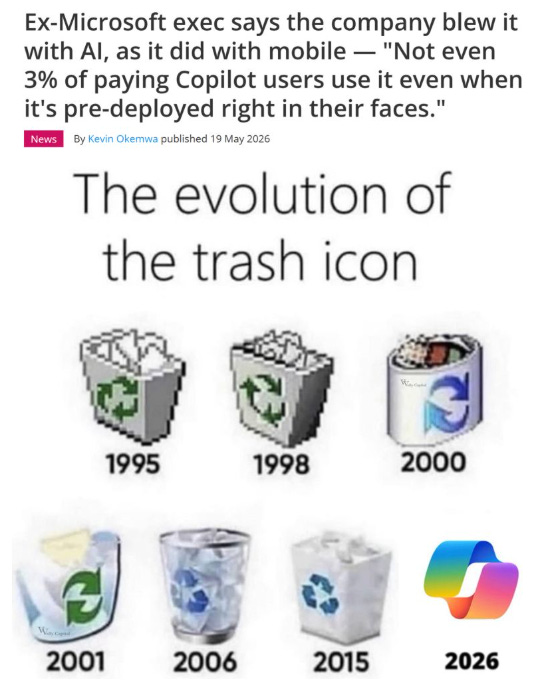
News, views and more research
The Token Plot
So I find more value in longer chained articles on Substack instead of short character tweets on X, but sometimes, I enter X to see what the next fad VCs or an engineer at a big tech company (who has no visibility beyond their station) will proclaim as the next big thing.
So here is a string of tweets I saw over the weekend (and by now are outdated).
Scene 1 - Rage bait
Ed is a media person… not an engineer.


Scene 2 - The engineer actually digs into the data
Simon is a engineer/architect/serial founder


Scene 3 - someone who tries to be impartial is clearly not chimes in
Gergerly was a former engineer at Uber, and a parrot for big tech


Scene 4 - Suddenly someone wants to be the first to coin a new era.
Ed is one of most connected VCs (and one I respect)… but declaration of a new phase when 99% of the market is still including ‘hello’ in their prompt is a bit premature.


Here is the reality based on my conversations with execs and internal data at Kerno.
AGI is DEFINITELY not here
AI is a tool that amplifies whatever processes you already have unless you are brave enough to fundamentally redesign your department’s/org way of working
AI is a new way to give your machine instructions with some better reasoning.. if done right.
Tokenmaxxing is stupid. Token leaderboards are stupid.
99% of companies are still figuring their use-case for AI… we have not reached the state of homogenous adoption or cookie cutting (and doubt we will)… what’s more likely is we will soon figure out that humans are better and more economically sounds for certain roles vs. everything as AI.
Don’t use X as your primary gauge for where the market is… but more where it could be in 12 months time.
Agentic Design Patterns
Full talk here by Guillaume Laforge, a Java Champion and Dev Advocate at Google.
A Pattern Language for AI Agents
As we move from simple RAG pipelines to autonomous agents, we face new challenges: non-determinism, “context rot,” and execution reliability. This talk organizes solutions into a set of reusable patterns.
The Patterns
Programmatic Planning: When a process requires strict steps, use hardcoded sequences or state machines instead of dynamic LLM planning. This gives high determinism, easier debugging, and reliable “golden paths” for critical tasks.
Progressive Disclosure (Agent Skills): Don’t flood the agent with every tool at once. Inject specific skills or tool docs into the prompt only when needed, keeping the context lean and reasoning focused. This reduces context rot and hallucinations.
Hierarchical Agent Decomposition: Solve complex problems with a team, not a generalist. A “Manager” agent coordinates specialized sub-agents (Coder, Researcher, Reviewer), letting you match model size to task: small and fast for simple work, larger for coordination.
Goal-Oriented Action Planning (GOAP): Borrowed from game AI, GOAP defines a goal plus the preconditions and effects of each tool, then lets a planner choose the action sequence that reaches the goal. This adds flexibility in dynamic environments.
Feedback Loops (Reflection): Pass an agent’s output to a “Critic” or “Verifier,” then have the agent reflect and regenerate. This “think, correct, execute” loop is essential for code generation and math reasoning.
LLM-as-Judge: Use high-capacity LLMs to score other models against defined rubrics. By quantifying qualities like helpfulness or safety, this enables automated benchmarking and faster iteration.
Tooling Corner
Some free, open-source and paid tools (by startups) worth exploring.
Podtrace | Ebpf based K8 event tracing
eBPF-driven diagnostic tool for Kubernetes applications.
Digital Whip for your Claude | for the lols
Thanks for reading, For more AI Builder Series Editions, subscribe here.
AI Builders is sponsored by
